Horseshoe Bay, Texas · Planning your investment
The cost to build a custom home in Horseshoe Bay.
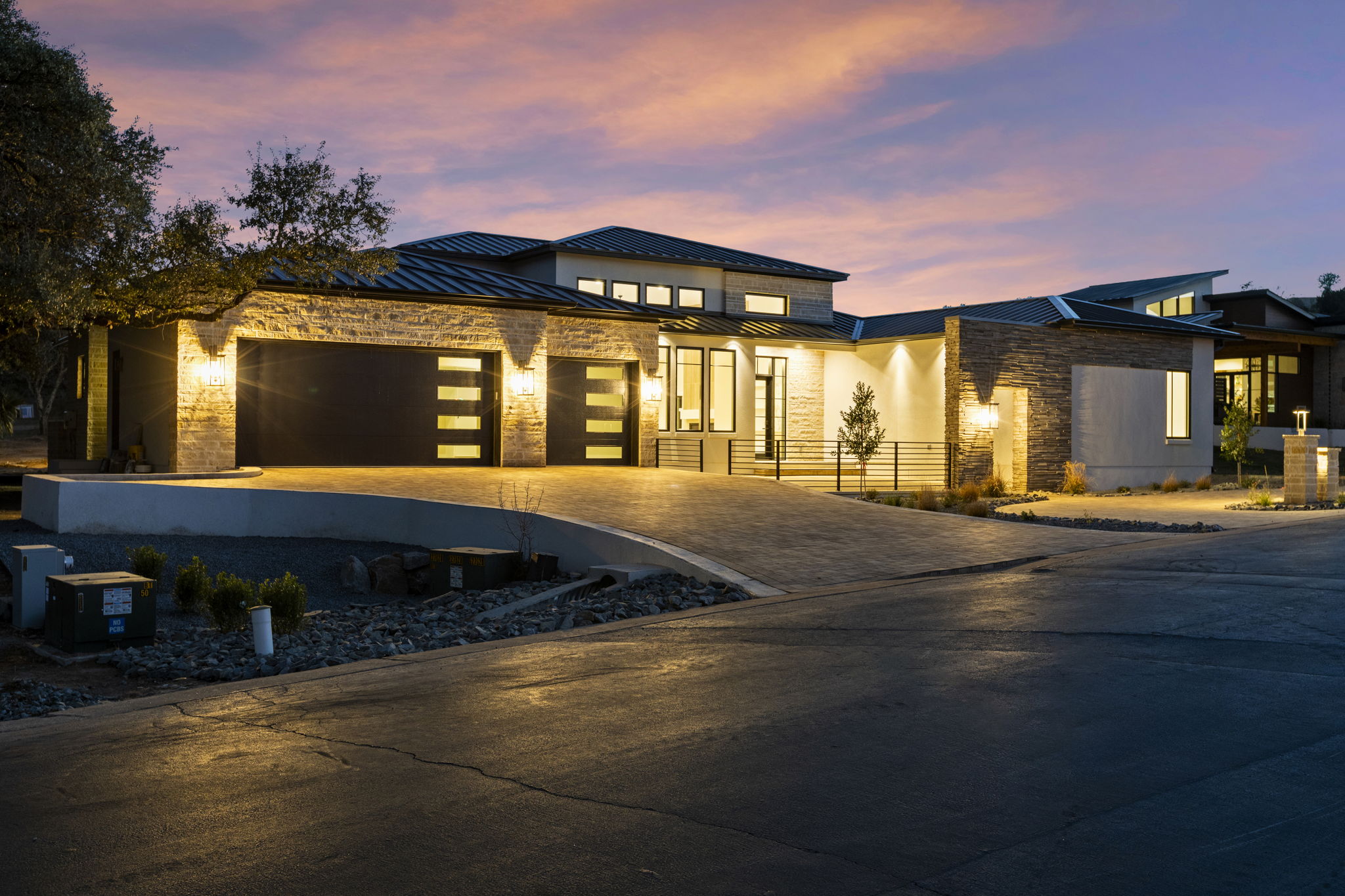
Blue Hour · Horseshoe Bay, Texas
Begin with a clear scope
A useful budget starts with the whole home.
There is no single price that describes every custom home in Horseshoe Bay. The property, size, structure, materials, and spaces you want all shape the investment. A house price without a defined scope leaves too many questions unanswered.
This guide explains the decisions behind a custom home budget. It is a starting point for planning, not a quote. A meaningful project discussion brings your property, priorities, and intended level of finish together.
01 — Define the whole project
What does the budget actually cover?
Before comparing numbers, make sure they describe the same work. A construction-only figure and a complete project budget may include very different things, even when both are presented as the cost of a new home.
Keep these categories visible. Ask whether each is included, excluded, or still being developed so that an unfinished decision does not look like a lower price.
Land and acquisition
If you are purchasing a lot, distinguish that investment from the home itself. Discuss any purchase-related costs separately from design and construction.
Site preparation and infrastructure
Excavation, grading, drainage, foundations, retaining work, access, and service connections depend on the property. A similar-sized home on another lot may require different work.
Design and professional services
Clarify the scope of architecture, interiors, surveying, engineering, and other professional input. Identify applicable review and permit costs as the project takes shape.
The home and its finishes
Structure, mechanical systems, exterior materials, windows, cabinetry, appliances, plumbing fixtures, and finishes should be considered together rather than as unrelated selections.
Outdoor spaces
Driveways, terraces, landscaping, pools, fences, and outdoor kitchens can be substantial parts of the plan. Confirm which are included in the budget being discussed.
Furnishings and a planning reserve
Identify furniture, window treatments, and styling needs separately. Discuss how to allow for unresolved scope and unexpected conditions without assuming a universal reserve fits every project.
02 — Compare like with like
Put price per square foot in context.
A price per square foot can be a useful comparison only when you know what the price includes and which area is being counted. Conditioned interior space, garages, and covered terraces do not describe the same scope, and different figures may treat them differently.
Two homes with the same interior area can have different structural spans, rooflines, window packages, cabinetry, and site conditions. Size alone will not explain those differences. Compare the design and specification behind the number.
Ask how area is measured
Confirm whether the figure uses conditioned living area, total covered area, or another measure. Use the same basis before comparing examples.
Check the included work
Ask about site preparation, design, exterior spaces, and allowances. List exclusions beside the headline figure so the comparison stays useful.
Check the date and definition
An earlier project's actual cost, an early planning estimate, and a current proposal are different kinds of information. Ask which you are looking at and what remains undecided.
03 — Make deliberate choices
Protect what matters most to you.
Start with the parts of the home that make everyday life better. The relationship between the kitchen and terrace, a comfortable guest suite, a particular view, or the materials you touch each day may matter more to you than extra area.
When the scope needs adjusting, review the design as a whole. A smaller footprint with carefully chosen spaces may serve your priorities differently from a larger home with a reduced finish specification. Neither is a decision to make from square footage alone.
Resolve allowances
Where a proposal uses an allowance for an unselected item, ask what quantity and quality it assumes and whether it includes installation and related costs. An allowance is not the same as a final selection.
Coordinate connected decisions
A larger glass opening may affect structure and shading. A moved kitchen may affect several trades. Understand the wider impact before treating a change as the cost of one product.
Keep changes visible
Ask how a proposed change affects scope, cost, and timing before approving it. Compare the revised plan with your original priorities, and keep a record of what has been agreed.
04 — Prepare for the conversation
Bring a range, a property, and your priorities.
Tell us the overall investment you are considering and whether that includes the land. Share the address or properties you are reviewing, any available drawings, the spaces you need, and a few examples of the finishes you like.
Lucas Anthony's design-build approach brings architecture, interiors, and construction into one conversation. You do not need every selection resolved to begin; a clear picture of what matters to you is a useful place to start.
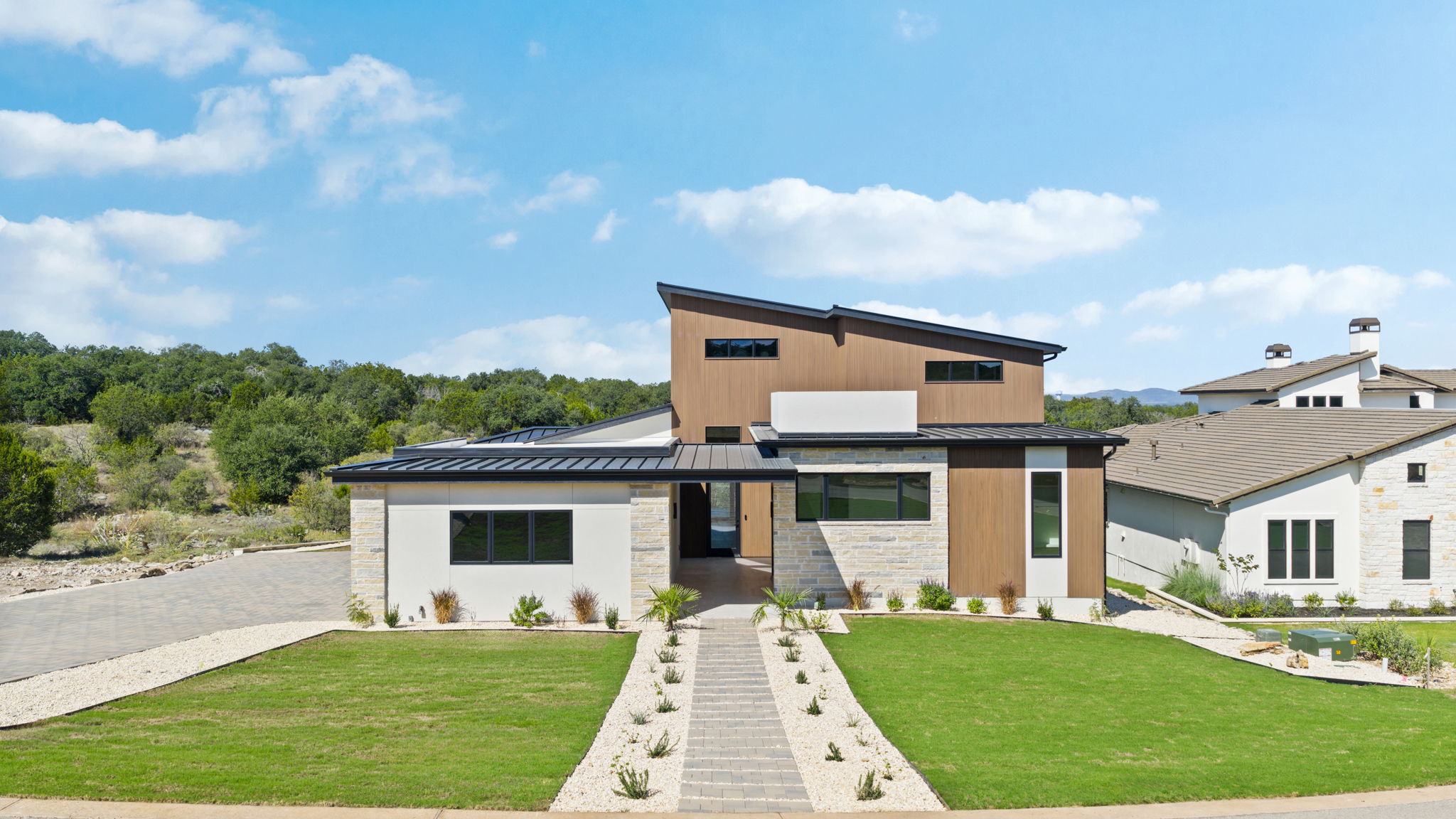
Selected Lucas Anthony residences
Find the details that matter to you.
Before you begin
A few useful questions.
How much does it cost to build a custom home in Horseshoe Bay?
The answer depends on the site, design, size, finish selections, and what the project includes. We do not publish a universal price per square foot here. Share your property and priorities with Lucas Anthony to begin a conversation about a scope that fits your intended investment.
Does a custom home construction price include the lot?
Do not assume it does. Clarify whether land, site work, design, professional services, exterior spaces, and furnishings are included in any figure you are reviewing. Keep the land purchase visible as a separate part of the overall project budget.
Why can two homes of the same size cost different amounts?
Site conditions, foundation and structural needs, architectural complexity, glazing, systems, materials, and finish selections can differ substantially. Equal interior square footage does not mean the homes include equal work.
What is an allowance in a building budget?
An allowance is an amount assigned to an item or scope that has not been fully selected or priced. Ask what it assumes, what is included, and how any difference will be handled when the selection is finalized. The details depend on the proposal and agreement.
Should I finalize all my plans before discussing budget?
Budget is useful early in the design conversation. Discussing your property, priorities, and intended investment before the plans are complete gives you an opportunity to consider the scope and design together.
Lucas Anthony Design & Build
Let’s talk about your home.
Tell us where you want to build, what matters most, and the investment you have in mind.
Discuss your project